Warhammer 40,000
Dawn of War IV
Explore the factions, units, commanders and systems of Warhammer 40,000: Dawn of War IV through facts published by official sources.
Search this game
From the official announcements
News & announcements
No announcements published here yet.
When a sourced announcement is published, it will appear here with its date and the records it concerns. In the meantime, explore the reference catalogue.
Explore the guides ↗The reference library
Where do you want to start?
79 guides
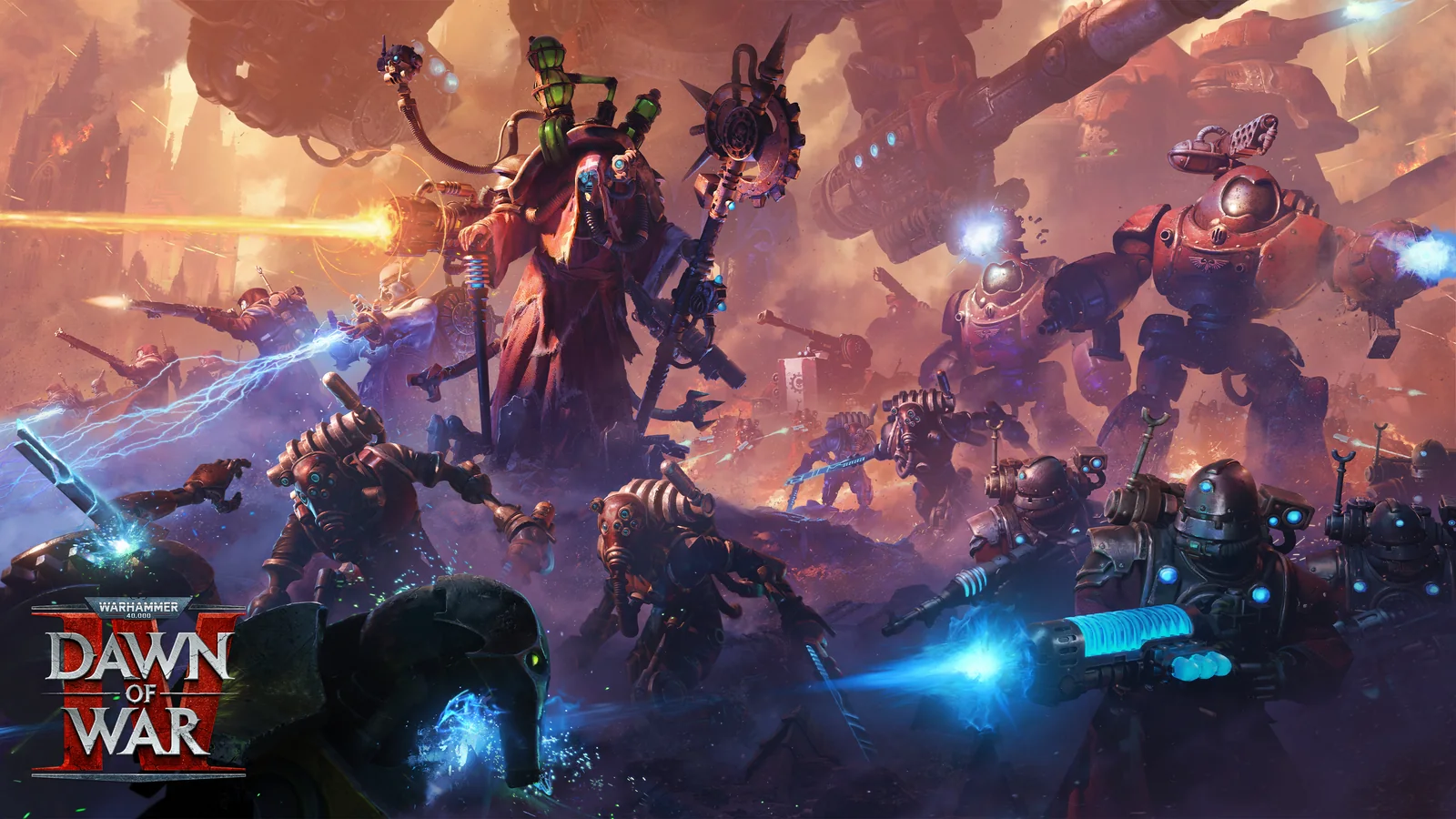 FactionsThe playable factions and the sub-factions official material presents as separately playable, with what is announced kept apart from what is not.6 records6 guides
 CommandersLeaders explicitly described as playable commanders by official sources.8 records8 guides
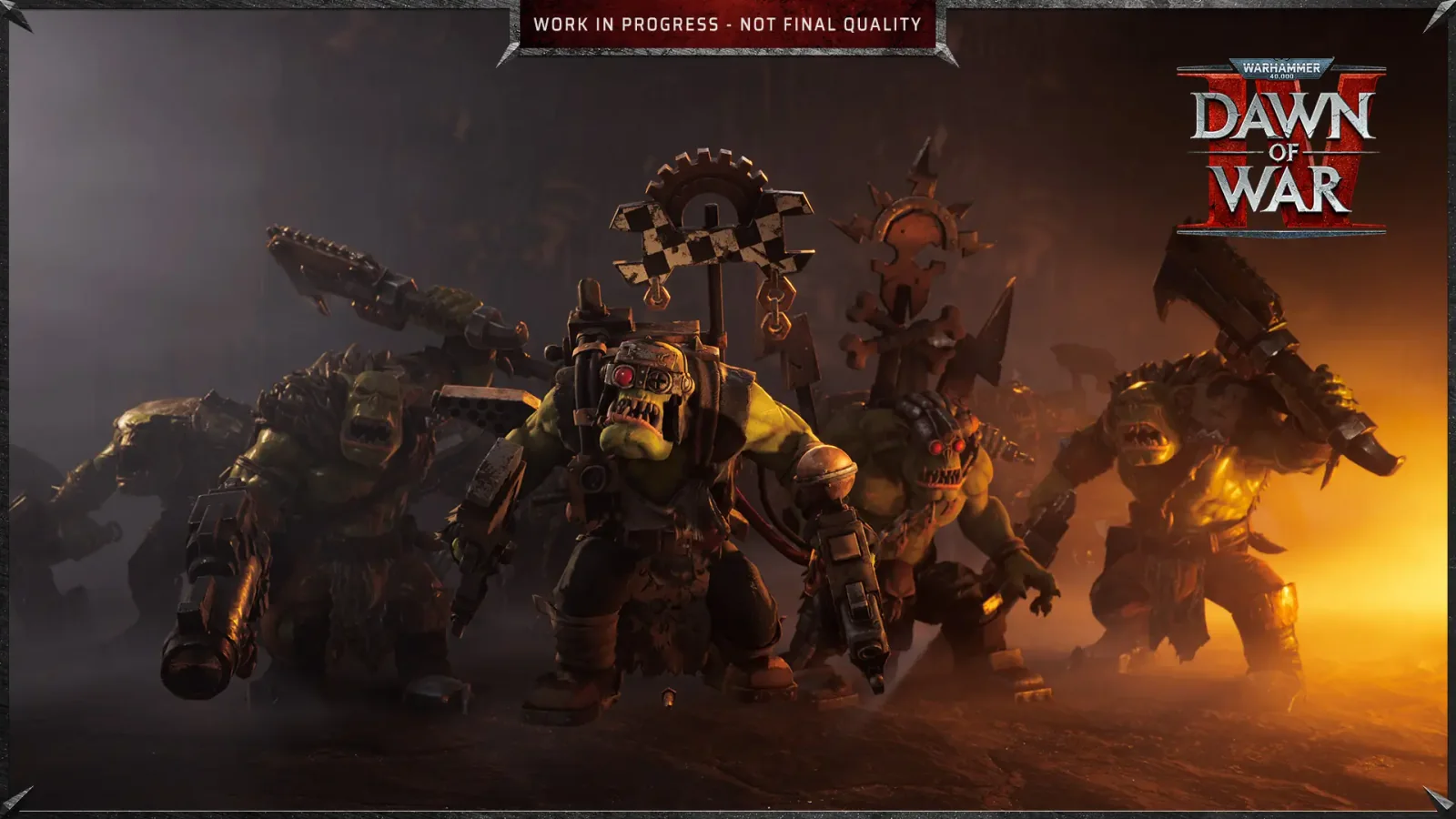 UnitsCombat units whose role, behaviour or equipment is described in official material.19 records18 guides
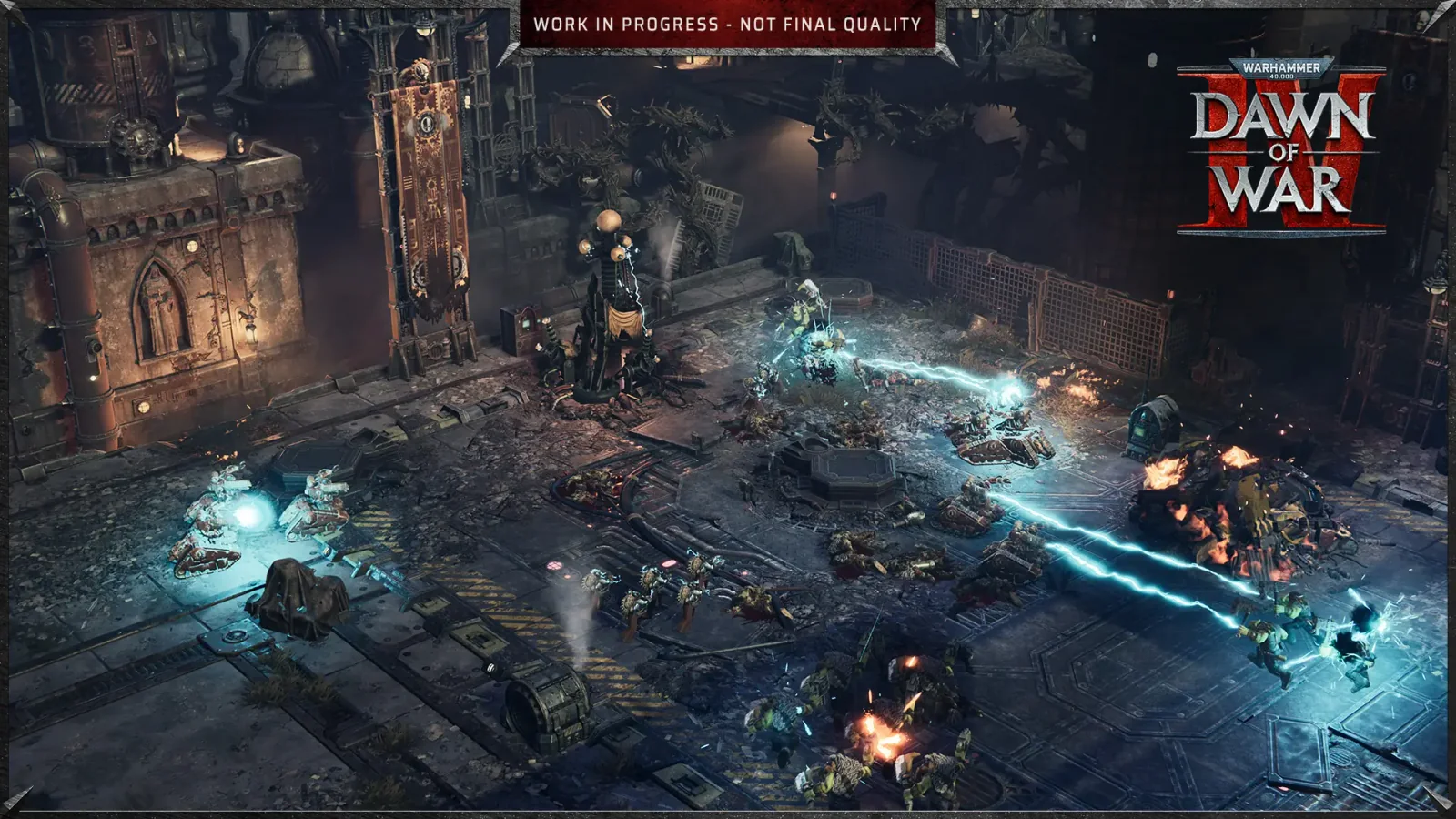 StructuresBuildings and battlefield structures with an explicitly documented function.8 records8 guides
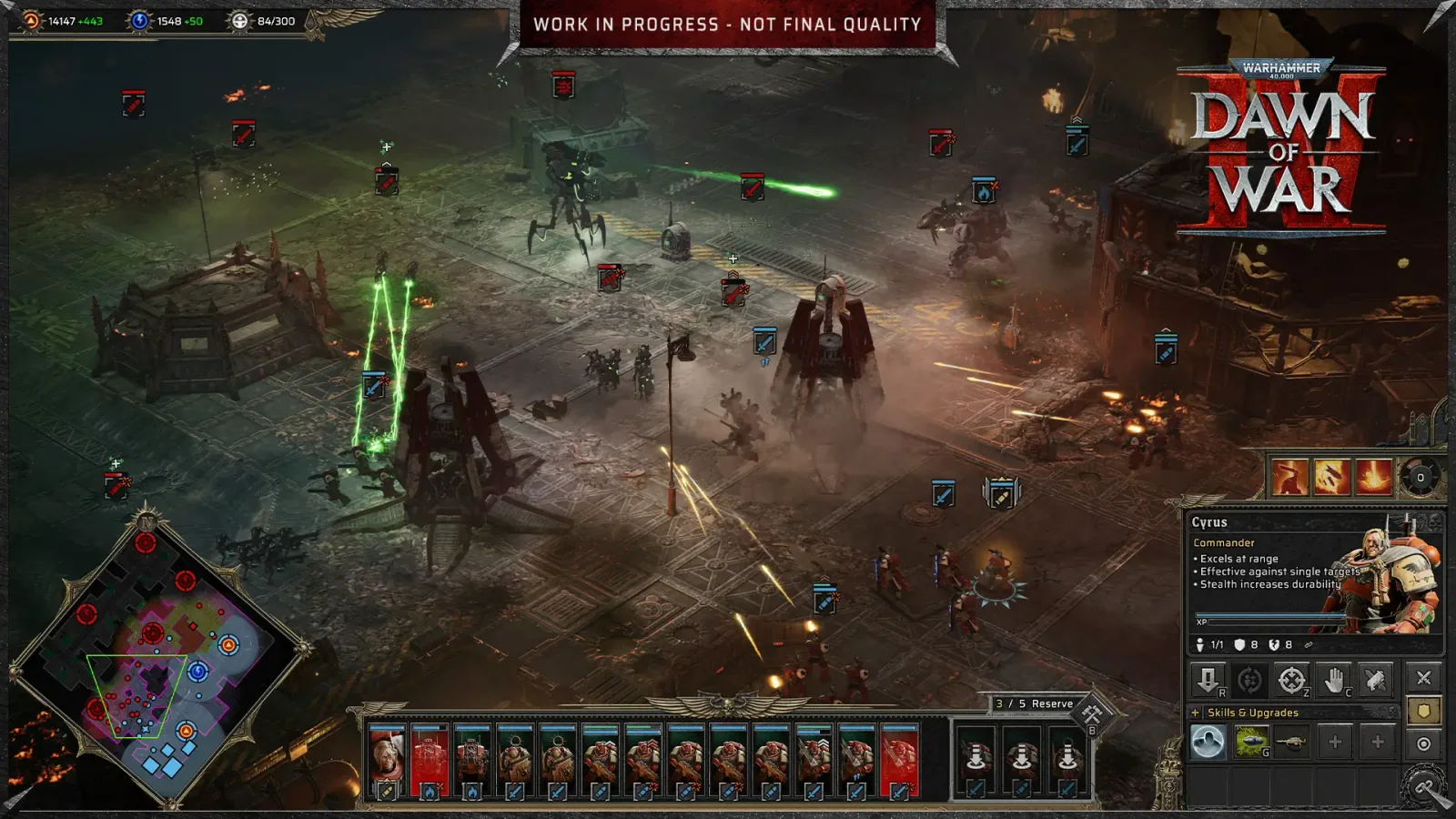 MechanicsNamed faction systems, strategic abilities, resources and shared gameplay mechanics.17 records17 guides
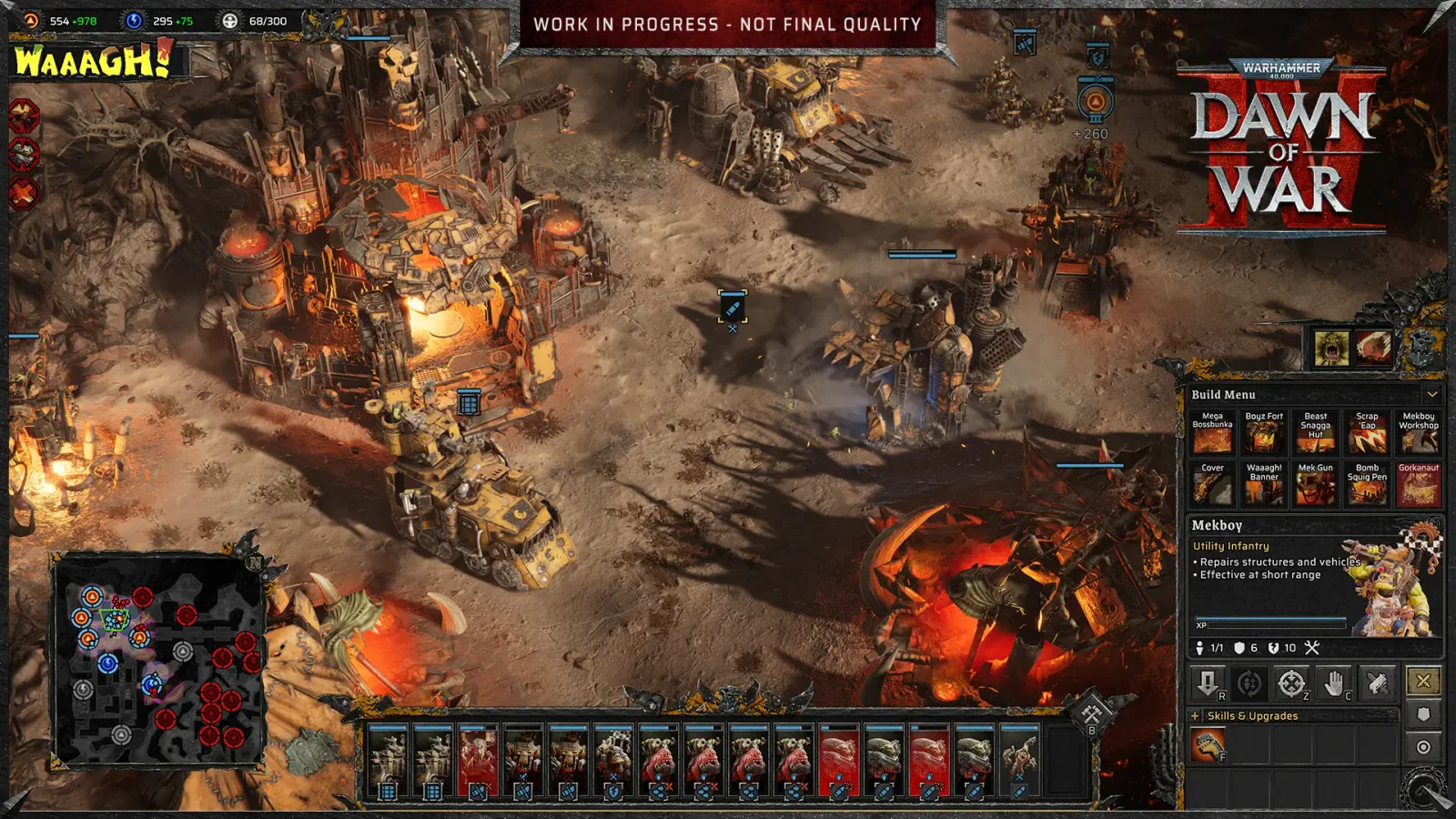 Game modesNamed modes with an officially described objective, format or progression loop.8 records8 guides
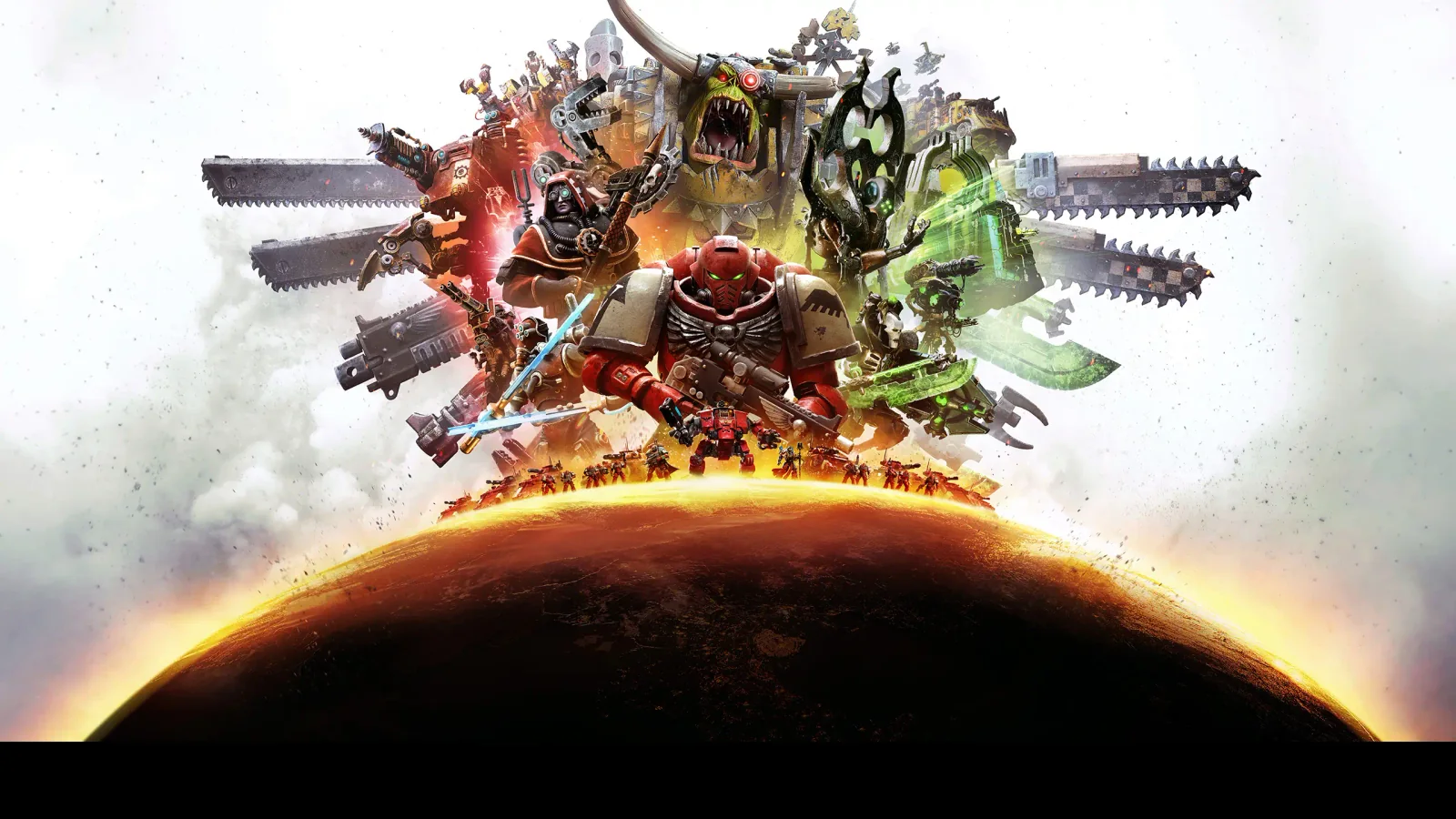 CharactersThe named characters of Dawn of War IV: who each one is, what the sources actually say, and where the published record stops.7 records7 guides
 LocationsNamed settings with an explicitly documented narrative or strategic role.2 records2 guides
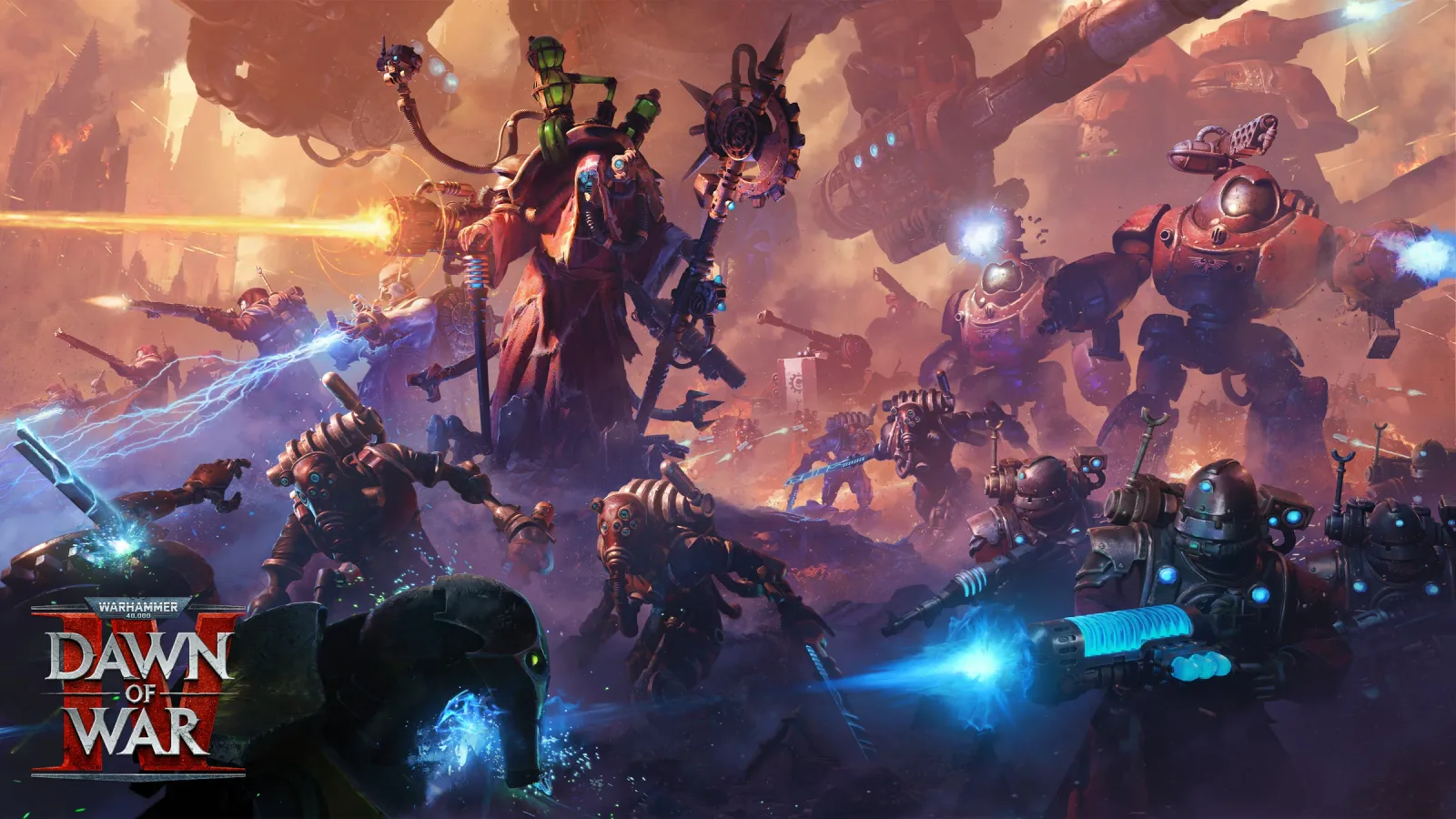 Editions and release detailsThe announced editions, the paid expansions planned for them, and what the store page publishes about the PC release.5 records5 guides
Looking for an answer?
Find your next move.
79 topics to explore
- Factions
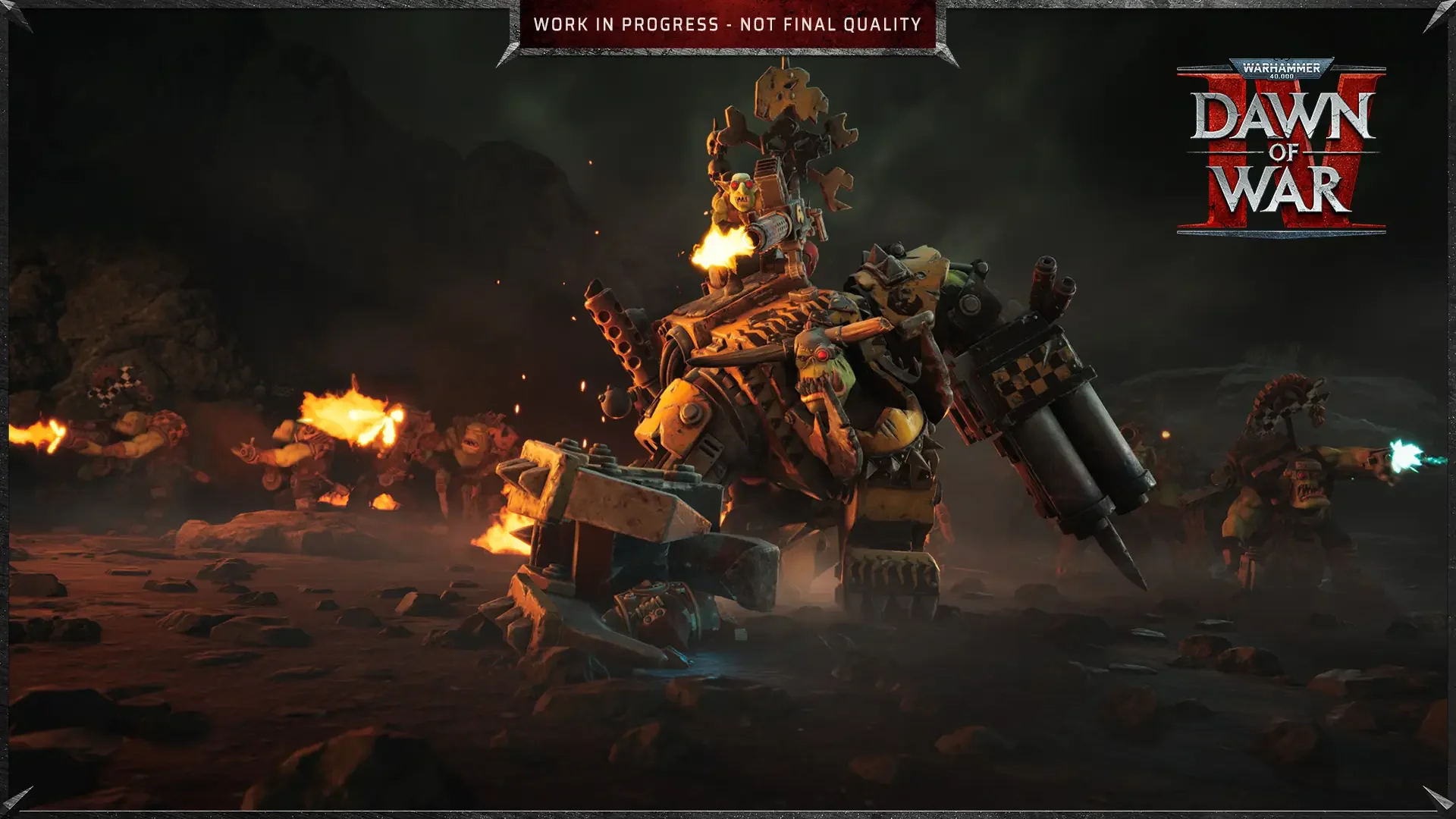
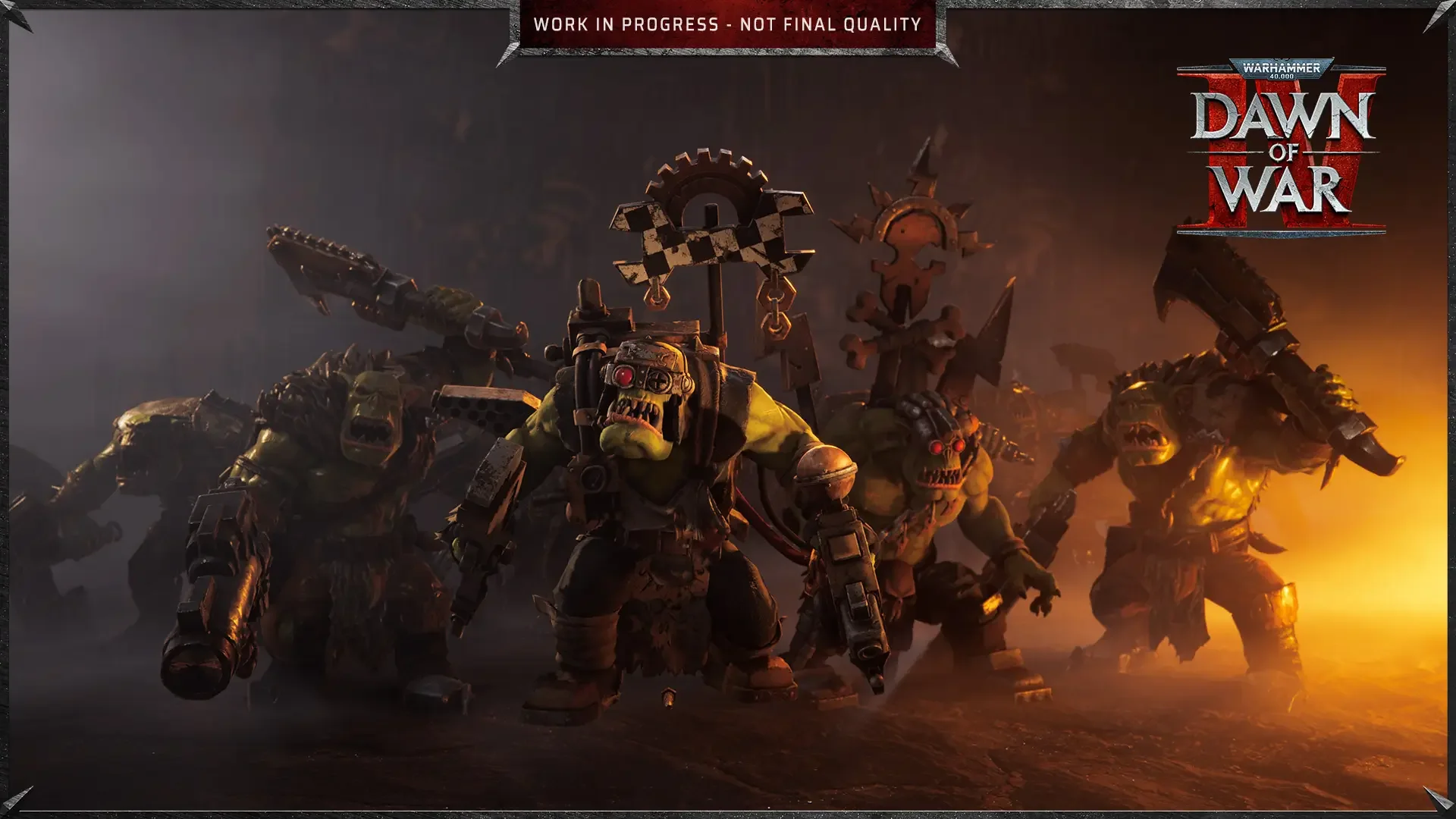
Orks
A playable faction built around relentless aggression, territorial expansion and strength in numbers.
Read topic ↗ - Factions
Adeptus Mechanicus
A playable, technology-focused faction that favours speed, ranged combat and interconnected battlefield systems.
Read topic ↗ - Factions
Necrons
A playable faction whose slow, resilient expansion is designed to become a snowballing battlefield threat.
Read topic ↗ - Factions
Space Marines
A playable elite faction with powerful but expensive units, on-field reinforcement and rapid redeployment tools.
Read topic ↗ - Factions
Blood Ravens
A playable Space Marines Chapter in the campaign, described as specialising in flexible strategic combat.
Read topic ↗ - Factions
Dark Angels
A playable Space Marines sub-faction in the campaign with access to Deathwing and Ravenwing elite forces.
Read topic ↗ - Commanders
Gorgutz
An Ork Warboss and Commander who fights in Mega Armour and supports both melee and ranged combat options.
Read topic ↗ - Commanders
Guzcutta
An Ork Beast Snagga Boss and Commander who can fight on foot before gaining a rideable Squigosaur.
Read topic ↗ - Commanders
Potentia Delta-9
An Adeptus Mechanicus Technoarcheologist Commander with flexible melee or ranged upgrade paths.
Read topic ↗ - Commanders
Skitarii Marshal Sek-Ix-23
An Adeptus Mechanicus Commander who strengthens attached and nearby units from the centre of a battle.
Read topic ↗ - Commanders
Chronomancer Thothmek
A playable Necron Commander who uses chronomantic powers to manipulate the battlefield.
Read topic ↗ - Commanders
Ahmnok
A playable Necron Commander presented as a more direct combat leader than Thothmek.
Read topic ↗ - Commanders
Company Master Astoran
A Dark Angels Commander in Terminator Armour who leads the Deathwing as a frontline force.
Read topic ↗ - Commanders
Chaplain Ezrael
A Dark Angels Commander associated with Ravenwing bikes and rapid lightning-strike tactics.
Read topic ↗ - Units
Ruststalkers
A close-combat Adeptus Mechanicus unit described as a way to pin enemies for supporting ranged fire.
Read topic ↗ - Units
Skitarii Rangers
An Adeptus Mechanicus ranged unit used to deliver firepower while melee units hold an enemy in place.
Read topic ↗ - Units
Knight Castellan
A colossal Adeptus Mechanicus-aligned combat machine supplied through House Raven and deployed by Drop Keep.
Read topic ↗ - Units
Ironstrider Ballistarius
A quick Adeptus Mechanicus vehicle designed to reach distant parts of the battlefield.
Read topic ↗ - Units
Onager Dunecrawler
A hulking and heavily weaponised Adeptus Mechanicus battlefield vehicle.
Read topic ↗ - Units
Skorpius Disintegrator
An Adeptus Mechanicus vehicle that supplies long-range firepower for the faction’s ranged playstyle.
Read topic ↗ - Units
Scarabs
A cheap and comparatively fast Necron swarm used to tie up enemy ranged units in melee.
Read topic ↗ - Units
Deathmarks
Necron sniper units described as capable of eliminating commanders and elite infantry at range.
Read topic ↗ - Units
Doomstalkers
Colossal Necron constructs that use Doomsday Blasters for explosive battlefield firepower.
Read topic ↗ - Units
Canoptek Spyders
Necron units that can construct Tomb Pylons anywhere on the map.
Read topic ↗ - Units
Monolith
A Necron machine whose Eternity Gate deploys units placed in reserve at the Tomb Citadel.
Read topic ↗ - Units
Flash Gitz
Powerful ranged Ork infantry equipped with massed bullet-firing snazzguns.
Read topic ↗ - Units
Squighog Riders
Mounted Ork Beast Snagga Boyz who move quickly before attacking with Stikka spears.
Read topic ↗ - Units
Meganobz
Ork units with weapon upgrades for either long-range firepower or short-range area damage.
Read topic ↗ - Units
Slugga Boyz
Ork infantry whose Burna is cited as a weapon effective against masses of units.
Read topic ↗ - Units
Deathwing
A Dark Angels elite force described as slow, punishing and effective as a frontline bulwark.
Read topic ↗ - Units
Ravenwing
A Dark Angels elite force associated with bikes, speed and hit-and-run tactics.
Read topic ↗ - Units
Space Marine Intercessor
A Space Marine unit with documented rifle and auxiliary weapon choices for different threats.
Read topic ↗ - Structures
Waaagh! Banners
Ork structures that official faction guidance recommends erecting while spreading multiple strongholds.
Read topic ↗ - Structures
Cogitator Relays
Adeptus Mechanicus structures whose destruction in key positions weakens the Noosphere Network.
Read topic ↗ - Structures
Void Shield
A large Adeptus Mechanicus structure that blocks enemy fire across its boundary while allowing movement through it.
Read topic ↗ - Structures
Tomb Citadel
The upgradeable Necron centre of operations and production engine for the faction’s units.
Read topic ↗ - Structures
Resurrection Galleries
Necron structures that return a selected type of fallen unit without an additional unit cost.
Read topic ↗ - Structures
Tomb Pylons
Necron structures that create a new Power Matrix area and receive translocated forces from the headquarters.
Read topic ↗ - Structures
Hammerfall Bunker
A Space Marine fortification presented as one of the game’s base-building defence options.
Read topic ↗ - Structures
Thunderhawk Relay
A Space Marine structure used with Reserves to move troops rapidly to the part of the map where they are needed.
Read topic ↗ - Mechanics
Combat Director
An animation system that continually assesses engagements and assembles matching combat animation sequences.
Read topic ↗ - Mechanics
Unit Veterancy System
A progression system through which surviving units grow in power and may unlock new abilities.
Read topic ↗ - Mechanics
Resource Points
Capturable and upgradeable map points used to secure resources and territorial control.
Read topic ↗ - Mechanics
Waaagh!
An Ork faction mechanic that fills from Ork battlefield presence and defeated enemies before empowering fighting units.
Read topic ↗ - Mechanics
Noosphere Network
The Adeptus Mechanicus network that links structures, static weapons and units into a shared sphere of influence.
Read topic ↗ - Mechanics
Auger Vision
An Adeptus Mechanicus strategic ability that gives an imperfect indication of activity beneath the fog of war.
Read topic ↗ - Mechanics
Power Matrix
A Necron field expanded by structures that supports construction, economy and friendly units standing within it.
Read topic ↗ - Mechanics
Dominion
A Necron resource whose generation increases as the faction expands its Power Matrix.
Read topic ↗ - Mechanics
Translocation Science
A Necron Stratagem that teleports a limited group of units to another visible point on the battlefield.
Read topic ↗ - Mechanics
Reserves
A deployment mechanic used by Space Marines and Necrons to move held units toward an active battlefront.
Read topic ↗ - Mechanics
Painter tool
An in-game feature for customising the appearance of the player’s armies and units.
Read topic ↗ - Mechanics
On-field reinforcement
A force-preservation mechanic that reinforces units in the field while consuming the player’s economy.
Read topic ↗ - Mechanics
Action Points
A limited Crusade-turn resource spent to move a Strike Force and attack territories on the world map.
Read topic ↗ - Mechanics
Requisition
A Crusade resource earned through conquest and spent on territories and persistent Strike Forces.
Read topic ↗ - Mechanics
Mission editor
A mission editor announced among the free updates planned for the year after launch.
Read topic ↗ - Mechanics
Separate Campaign and Multiplayer Balance
A stated policy of balancing the campaign and the multiplayer separately, so the same unit can differ in strength between them.
Read topic ↗ - Mechanics
Destruction System
A dedicated system under which constructed buildings collapse when sufficiently damaged and scenery can be reduced to rubble by stray fire.
Read topic ↗ - Game modes
Campaign
Four faction storylines feed into one overarching campaign narrative across more than 70 missions.
Read topic ↗ - Game modes
Last Stand
A returning horde-style mode built around surviving increasingly dangerous waves of enemies.
Read topic ↗ - Game modes
Skirmish
A configurable battle mode in which players choose the map, factions, difficulty and other settings.
Read topic ↗ - Game modes
Multiplayer
Competitive online play with announced support for one-versus-one and team formats.
Read topic ↗ - Game modes
Annihilation
The default Quick Match mode, won by destroying every enemy headquarters while protecting one’s own.
Read topic ↗ - Game modes
Domination
A multiplayer mode that awards Victory Points for controlling more Strategic Positions than the opponent.
Read topic ↗ - Game modes
Maelstrom
A multiplayer mode that awards Victory Points for objectives appearing dynamically across the map.
Read topic ↗ - Game modes
Crusade
An announced replayable campaign mode combining a turn-based Kronus world map with persistent tactical battles.
Read topic ↗ - Characters
Captain Cyrus
A Blood Ravens leader who arrives over Kronus to recruit aspirants before the force is ambushed by Gorgutz.
Read topic ↗ - Characters
Chief Librarian Jonah Orion
A Blood Ravens leader who travels to Kronus with Cyrus at the beginning of the campaign story.
Read topic ↗ - Characters
Lion El’Jonson
The Dark Angels Primarch, announced as playable for a small but pivotal part of the battle for Kronus.
Read topic ↗ - Characters
Magos Dominus Nulpherus-1
The Adeptus Mechanicus Magos Dominus who leads the expedition into a dormant Necron tomb beneath Kronus.
Read topic ↗ - Characters
Engram
Engram is a character the official cast announcement credits to Trev Fleming; nothing further about the character has been published.
Read topic ↗ - Characters
Buzzsnap
Buzzsnap is a character the official cast announcement credits to Joseph Capp; nothing further about the character has been published.
Read topic ↗ - Characters
Governor Augusta Vorn
Governor Augusta Vorn is a character the official cast announcement credits to Bethan Bixton Bate; nothing further about the character has been published.
Read topic ↗ - Locations
Kronus
The planet on which Dawn of War IV’s campaigns and Crusade world map are set.
Read topic ↗ - Locations
Aurelia
The world a second Blood Ravens strike force is said to be heading for in the announced Story Prologue expansion.
Read topic ↗ - Editions and release details
Standard Edition
The base game on its own, sold on PC with a ten per cent pre-order discount announced for it.
Read topic ↗ - Editions and release details
Commander Edition
The larger of the two announced editions: the base game, both paid expansions, a digital soundtrack and a three-day early unlock.
Read topic ↗ - Editions and release details
Blood Ravens Story Prologue
The first announced paid expansion, covering the events that lead up to the start of the campaign.
Read topic ↗ - Editions and release details
Aftermath
The second announced paid expansion, said to deepen the campaign and to introduce an entirely new faction.
Read topic ↗ - Editions and release details
Supported languages
Thirteen languages listed on the store page, only one of them with full audio.
Read topic ↗
No matching topics. Try another word or game. Save a topic with its star to find it here later.
Your saved topics stay on this device. No account needed.
Official images
Inside the game
Publisher screenshots, with their original labels intact. Open an image to see it in full.